← When Science Became Political
The Project 2025 Connection
From Political Influence to Political Control
Project 2025's Mandate for Leadership does not use the word “undermine” to describe what it proposes for the CDC, NIH, and HHS. It proposes narrowing CDC's policy authority, breaking what it calls the “NIH monopoly on directing research,” and restructuring HHS. The document existed before the second Trump administration took office — which means the proposal and the outcome can be compared directly, not argued about.
A blueprint is a rare thing to have
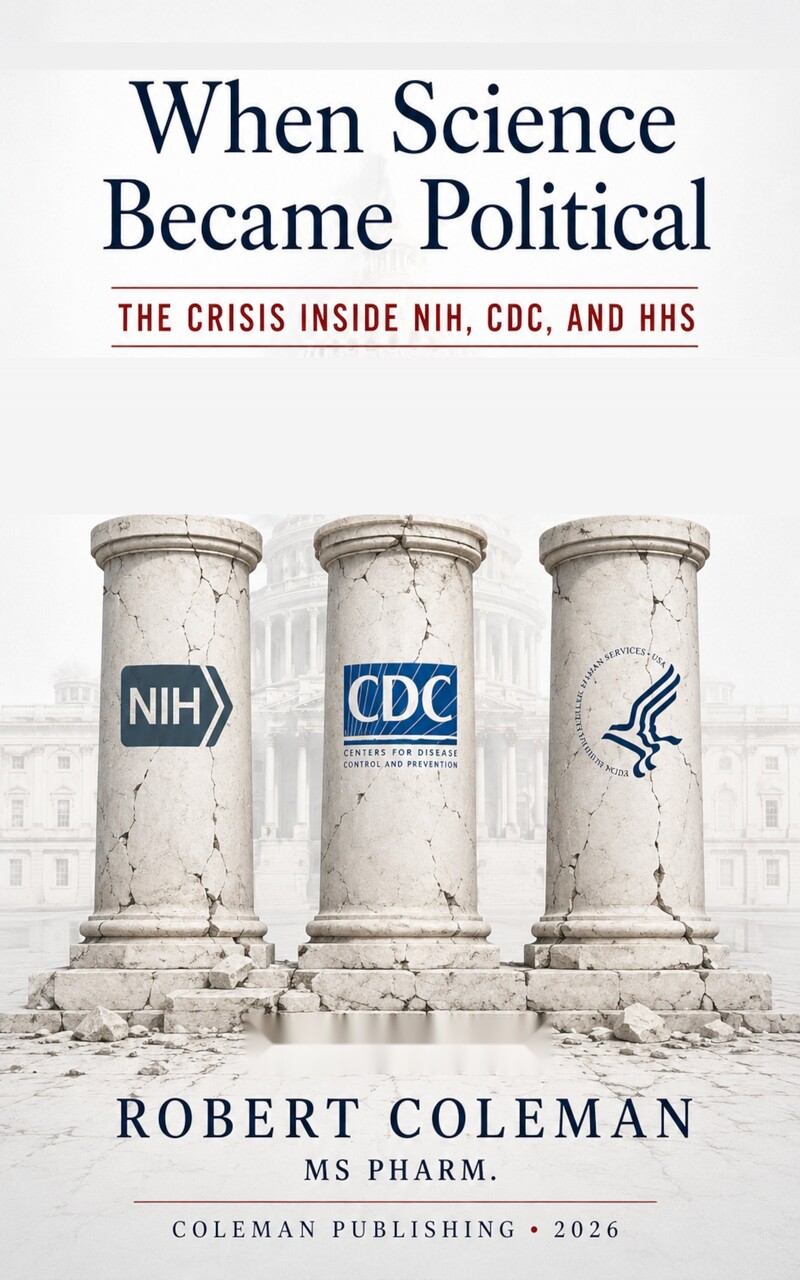
When Science Became Political documents what happened to the CDC, NIH, and HHS in 2025 and 2026 without asking why any one appointee made any one decision. Motive is usually the hardest thing for an investigator to establish and the easiest thing to get wrong.
Project 2025 changes that calculus for one narrow question. The Heritage Foundation's Mandate for Leadership: The Conservative Promise was published in 2023, before the administration took office, and it says specific things about how CDC, NIH, and HHS should be restructured. That means the comparison below isn't speculation about intent. It's a documented proposal, tested against a documented outcome.
The question this page asks is narrow on purpose: how much correspondence exists between the institutional changes Project 2025 recommended and the institutional changes the administration actually made? That's answerable with evidence. Whether it happened because of the document, alongside it, or for unrelated reasons of its own is a different question — one this page does not claim to settle.
The Document
What Project 2025 proposes for CDC, NIH, and HHS
CDC: narrow the agency's role and separate epidemiological data collection from the authority to issue policy recommendations — confining CDC more tightly to data-gathering rather than translating that data into public guidance.
NIH: the plan states its position without qualification.
“The NIH monopoly on directing research should be broken.”— Mandate for Leadership, Ch. 14
It goes on to propose capping the payments NIH makes to universities and hospitals for research overhead, and directs Congress to consider block-granting a share of NIH's research budget to the states rather than allocating it through NIH's own peer-review process.
HHS: restructure the department's organization and workforce. HHS is not one more federal agency — it contains or oversees CDC, NIH, FDA, and CMS, so changing HHS's structure changes the institutional environment all four operate inside.
Source: Heritage Foundation, Mandate for Leadership: The Conservative Promise (2023), Chapter 14; reporting confirmed by KFF Health News and CNN, February 2025.
Blueprint vs. Reality
Then the blueprint met an administration
The book documents each institutional change below on its own terms, with its own sourcing, in Chapters 6, 7, and 13. What follows sets the Project 2025 proposal next to what the book already establishes happened.
CDC: from policy authority to data collection
| Project 2025 proposed | What happened |
|---|---|
| Confine CDC to data collection; separate that function from policy recommendations | ~2,400 CDC employees terminated beginning February 13, 2025 — roughly a quarter of the agency's workforce, per the book's Chapter 6 |
| Reduce the agency's institutional footprint | 38 of 82 federal public health surveillance databases disrupted or taken offline during 2025 (Chapter 6) |
NIH: breaking the “monopoly”
| Project 2025 proposed | What happened |
|---|---|
| “The NIH monopoly on directing research should be broken”; cap university overhead payments | 2,291 NIH research grants terminated, worth $2.45 billion, February–December 2025 (Chapter 7) |
| Reduce NIH's direct control of the research budget | Approximately 1,200–1,300 NIH employees cut in the department-wide April 2025 reduction in force |
HHS: restructuring the department
| Project 2025 proposed | What happened |
|---|---|
| Restructure HHS's organization and workforce | March 27, 2025: HHS announced a reduction from approximately 82,000 to approximately 62,000 employees — 28 divisions consolidated into 15, five of ten regional offices closed |
Advisory structure: who gets to evaluate the evidence
| Project 2025 proposed | What happened |
|---|---|
| Increase political control over public-health policy decisions | All 17 members of the Advisory Committee on Immunization Practices fired June 9, 2025 and replaced; a federal court later found the related vaccine-schedule change violated the Administrative Procedure Act and the Federal Advisory Committee Act (Chapter 13) |
Testing the claim. The 2,400-employee CDC figure most likely refers to the same reduction the book documents from February 13, 2025 — some outlets describe it by the date termination notices went out, others by the date the broader HHS reorganization formally executed it on April 1. That's a sourcing-convention difference, not two separate rounds of cuts, and it's treated that way here. Every other figure above is independently confirmed by at least one outlet outside the administration's own communications.
The correspondence in every row is real. What it doesn't establish is causation. Project 2025 was written by outside contributors, not enacted as law, and the administration has never stated that any specific action followed the document. Treating every institutional change as a Project 2025 checkbox would turn an investigation into an accusation the evidence doesn't support. But dismissing the correspondence as coincidence requires its own evidence — and four-for-four, at this scale, is not nothing.
Method
The standard for what counts
Every future institutional change at CDC, NIH, or HHS gets tested against the same five questions before it's added to this page or to Institutional Updates:
- Was the change proposed in Project 2025?
- Did a comparable change occur after January 2025?
- Was the institutional effect similar?
- Did the change increase political control or decrease scientific independence?
- What happened to the agency's ability to produce, evaluate, or communicate evidence?
A yes on all five doesn't prove the document caused the outcome. It means the pattern is specific enough to keep testing rather than to dismiss — which is a different, and lower, bar than proof.
What this does — and doesn't — settle
This page does not establish that Project 2025 directed the administration's actions at CDC, NIH, or HHS. No document in the public record makes that claim, and this page doesn't make it either.
What it does establish: a written blueprint existed before January 2025, it specifically addressed these three agencies, and the institutional changes made since then correspond to that blueprint closely enough, across enough separate agencies, that the correspondence is worth tracking rather than dismissing. The same standard would apply if a Democratic administration's actions matched a comparable outside blueprint. The question is about the mechanism, not the party.
The blueprint exists. The changes happened. The correspondence can be tested.
When Science Became Political documents what was done to CDC, NIH, and HHS through May 12, 2026.
Every figure on this page is sourced above or documented in the book. Content current through August 2026.